
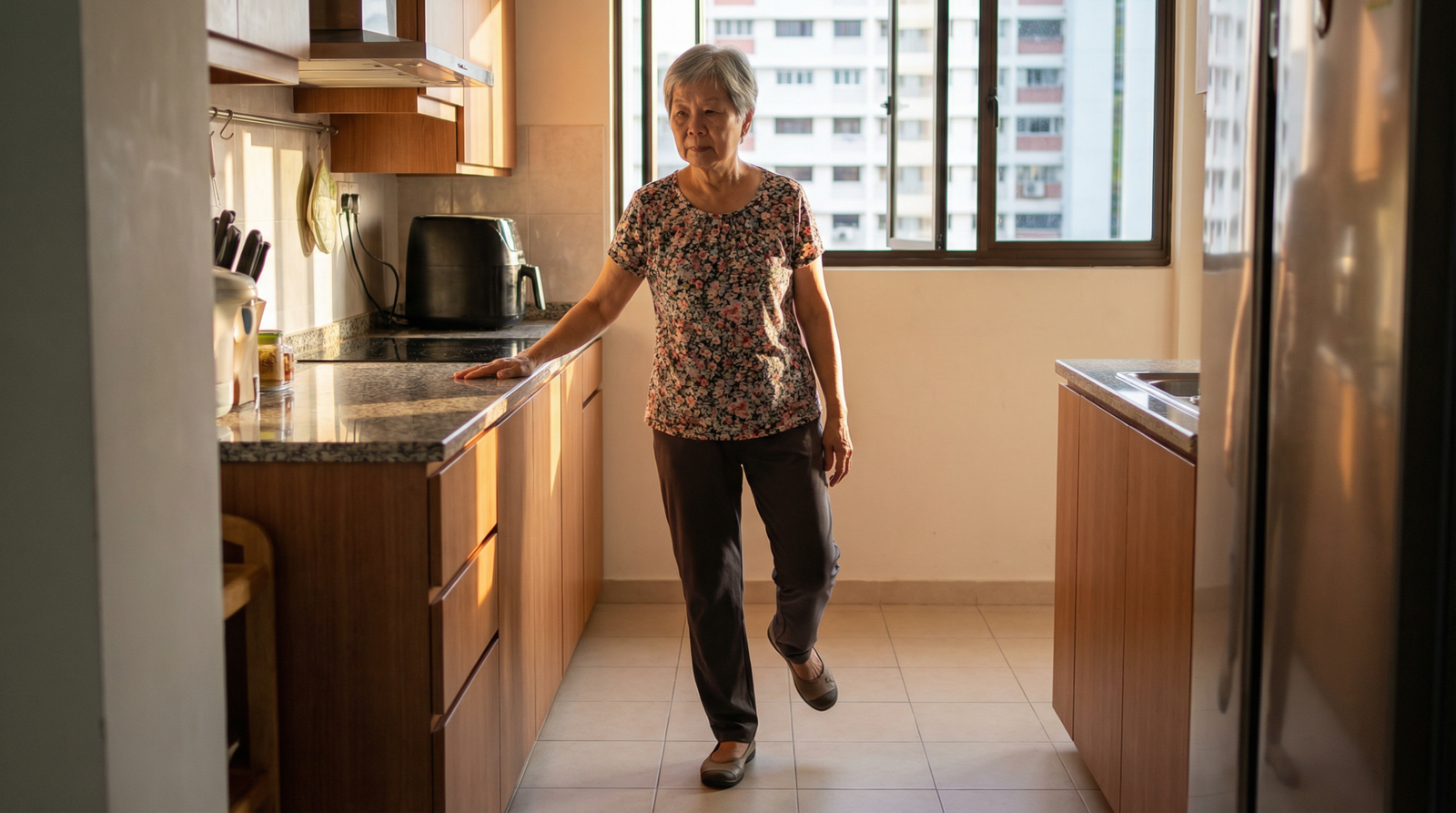
Every year in Singapore, falls are one of the leading causes of injury-related hospitalisation in adults aged 65 and above. One in three older adults falls at least once a year. Of those who fall, a significant proportion experience a serious injury — a fractured hip, a head injury, a loss of confidence that permanently reduces their physical activity and independence.
What makes this statistic particularly important is that most falls in older adults are preventable. They are not random bad luck. They are the predictable outcome of specific, addressable risk factors — and understanding those factors is the first step to reducing them.
Why Older Adults Fall: The Key Risk Factors
Falls in older adults rarely have a single cause. They typically result from a combination of factors that compound each other:
- Muscle weakness — particularly in the legs. Sarcopenia (age-related muscle loss) reduces the strength needed to recover from a stumble or imbalance before it becomes a fall.
- Impaired balance and proprioception — proprioception is the body’s internal sense of position. As we age, this sense becomes less accurate, making it harder to adjust automatically to uneven surfaces, steps, or unexpected movements.
- Reduced walking speed and gait changes — older adults who shuffle, take shorter steps, or walk more slowly have less ability to react to obstacles and recover from missteps.
- Medication side effects — many common medications for blood pressure, sleep, anxiety, and pain management have side effects that include dizziness, light-headedness, or reduced coordination.
- Vision changes — reduced depth perception and contrast sensitivity make it harder to judge distances and spot hazards, especially on stairs and in low light.
- Home environment hazards — loose rugs, cluttered floors, poor lighting, lack of grab rails, and wet bathroom surfaces are major contributors to falls in the home.
- Fear of falling — paradoxically, the fear of falling is itself a fall risk factor. It causes older adults to move more cautiously and rigidly, which reduces balance and coordination further.
The Role of Physical Activity in Fall Prevention
Physical activity is the single most evidence-supported intervention for fall prevention in older adults. Specifically, exercises that target leg strength, balance, and gait have been shown in multiple large-scale trials to significantly reduce both the rate of falls and the risk of fall-related injury.
The challenge, as discussed throughout our resources, is that many older adults who most need fall prevention exercise are least able to do conventional exercise safely. Someone with osteoarthritis, limited mobility, or a fear of falling is unlikely to benefit from a gym programme — and may be actively harmed by it.
This is where lower-threshold approaches become essential.
Practical Fall Prevention Strategies for Older Adults in Singapore
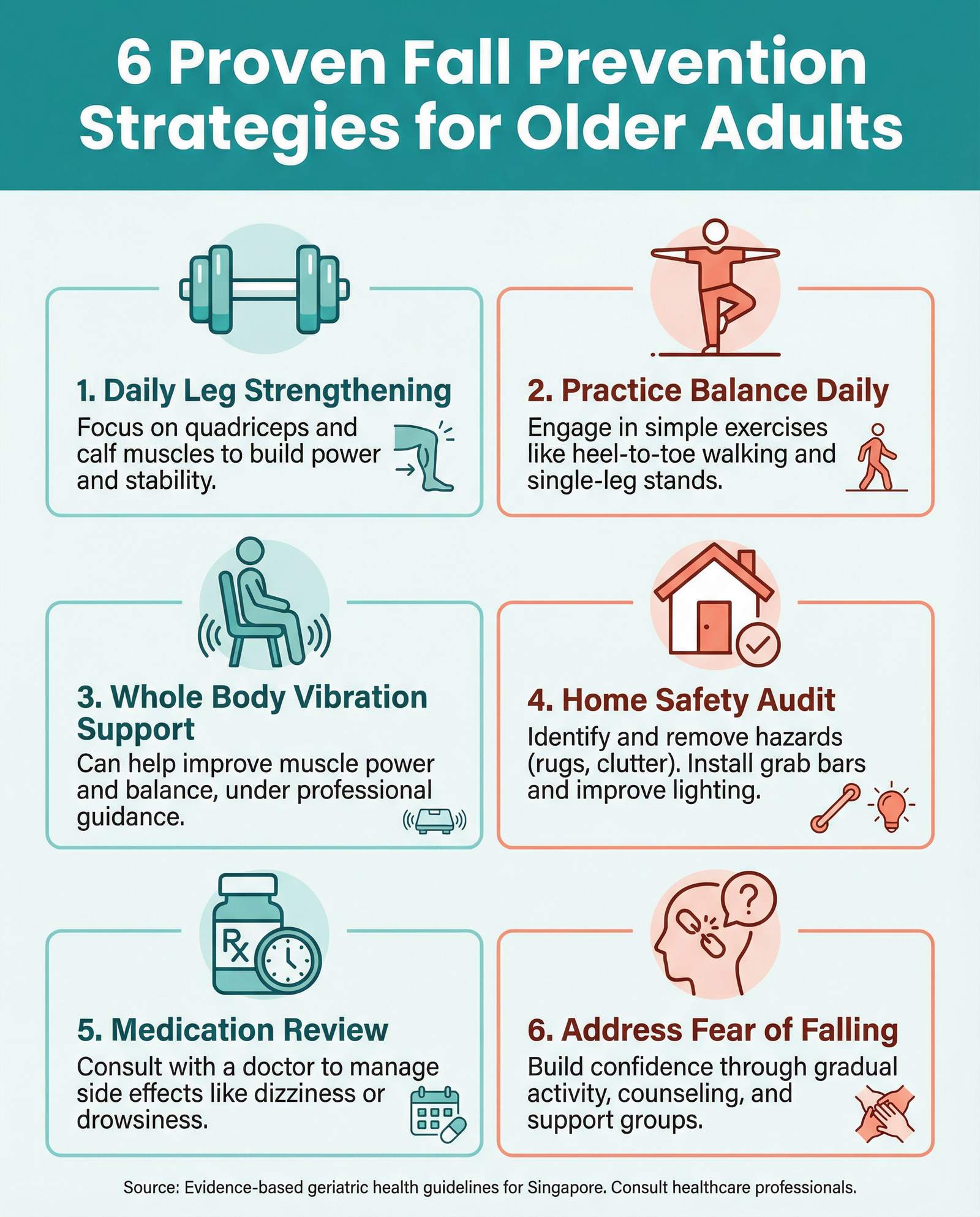
1. Strengthen the Legs Daily
Leg strength is the most direct physical predictor of fall risk. Simple, low-impact exercises done consistently make a significant difference:
- Seated leg lifts — sitting in a chair, slowly lift one leg straight out, hold for 5 seconds, lower. Repeat 10 times each leg.
- Chair stands — rising from a seated position without using the arms, as slowly and controlled as possible. Even 5 repetitions daily builds meaningful strength over weeks.
- Calf raises — standing behind a chair for support, rising onto the balls of the feet and slowly lowering. Strengthens the ankles and lower legs, which are critical for balance recovery.
2. Practice Balance Deliberately
Balance, like strength, improves with targeted practice:
- Single-leg standing — holding a stable surface, practice standing on one foot for 10–30 seconds. Progress to doing this without holding on as balance improves.
- Heel-to-toe walking — walking in a straight line placing one foot directly in front of the other, as if on a tightrope. This challenges balance in a controlled, safe way.
- Tai Chi — Singapore’s active ageing centres offer regular Tai Chi sessions. Research consistently shows Tai Chi reduces fall incidence in older adults by improving balance, coordination, and confidence.
3. Use Whole Body Vibration to Support Muscle Activation
For older adults who find conventional strengthening exercises difficult, whole body vibration (WBV) technology offers a complementary approach. By delivering controlled mechanical vibrations through a platform or chair, WBV triggers involuntary muscle contractions — particularly in the legs and core — without requiring active exertion.
Research published in peer-reviewed journals has found that regular whole body vibration sessions are associated with improvements in leg muscle strength and balance scores in older adult populations. At Vibrahealth, we offer BGREEN WBVV (Whole Body Vertical Vibration) platforms and chairs designed for this purpose.
Our products are general wellness equipment and are not medical devices. They are not intended to diagnose, treat, cure, or prevent falls or any medical condition. Please consult a physiotherapist or doctor for a personalised fall prevention assessment.
4. Review the Home Environment
Many falls happen at home, often in predictable locations. A simple home audit can remove significant risks:
- Remove loose rugs or secure them with non-slip backing
- Ensure adequate lighting in all rooms, especially hallways and bathrooms — use night lights for those who wake at night
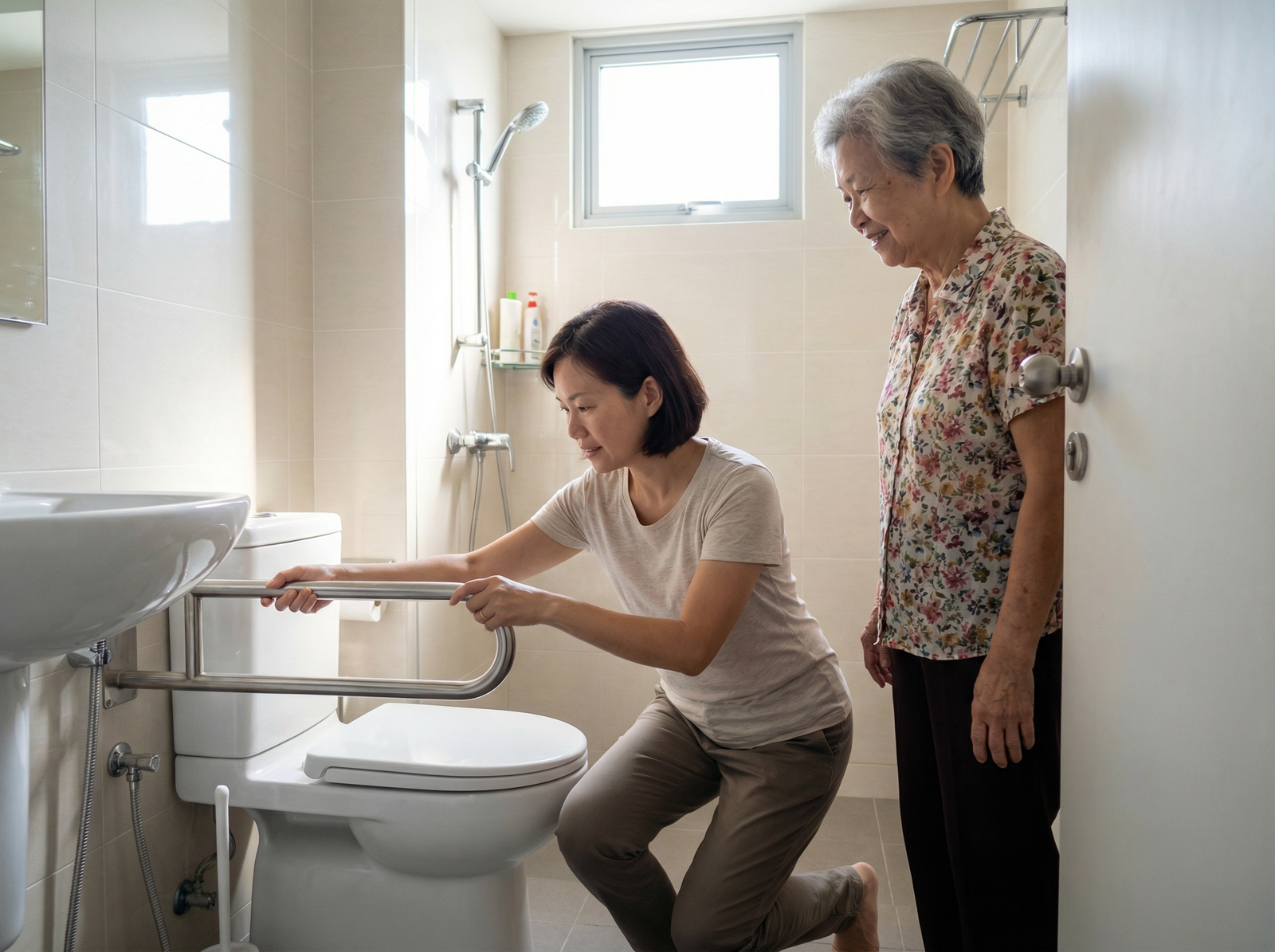
- Install grab rails next to the toilet, in the shower, and on both sides of staircases
- Keep commonly used items at waist height to avoid reaching up or bending down
- Clear pathways of clutter, cables, and low furniture that can catch a foot
HDB and many Singapore town councils offer home modification subsidies for eligible older adults — check with your local social service office or Agency for Integrated Care (AIC) for details.
5. Review Medications With a Doctor
If your parent is on multiple medications — particularly for blood pressure, sleep, or pain — ask the prescribing doctor or pharmacist about fall-related side effects and whether any adjustments are possible. This is one of the most underutilised fall prevention strategies and one of the most effective.
6. Address the Fear of Falling Directly
Fear of falling is not irrational, but it becomes self-reinforcing when it causes people to reduce activity — which weakens the muscles and balance systems needed to prevent falls. A structured, gradual reintroduction to physical activity — starting with extremely low-threshold, zero-exertion options — can rebuild confidence without the risk of the high-exertion activities that triggered the fear.
When to Seek Professional Assessment
If your parent has already had a fall, or if they express significant fear of falling, a formal fall risk assessment by a physiotherapist or geriatric specialist is worthwhile. Singapore’s public hospitals and polyclinics offer these assessments, and many private physiotherapy clinics provide fall prevention programmes.
Vibrahealth works alongside physiotherapy partners and eldercare facilities — if you are a healthcare professional looking to explore WBV as a complementary tool in fall prevention programmes, visit our physiotherapy partner page.
Frequently Asked Questions
What is the number one cause of falls in elderly people?
Muscle weakness — particularly in the legs — combined with impaired balance is the most common physical cause. Environmental hazards (rugs, poor lighting, wet floors) and medication side effects are the most common situational causes. Most falls involve a combination of these factors.
How can I prevent my elderly parent from falling at home in Singapore?
A home safety audit to remove physical hazards is the most immediate step. Alongside this, building leg strength and balance through regular gentle exercise, reviewing medications with their doctor, and ensuring good lighting throughout the home are the most evidence-supported interventions.
Does whole body vibration help with fall prevention in elderly people?
Research suggests that regular WBV sessions may support improvements in leg muscle strength and balance scores in older adults, both of which are directly linked to fall risk. WBV is used alongside — not instead of — conventional fall prevention approaches including exercise and home safety modifications. Our products are wellness equipment, not medical devices.
At what age should fall prevention start?
The earlier the better. Muscle and balance decline begins in the 40s, and building strength and balance habits before they become urgent is far more effective than intervening after a fall has occurred. That said, meaningful improvements can be made at any age with consistent, appropriate activity.
Visit the Vibrahealth Wellness Lounge at The Adelphi, 1 Coleman Street #B1-35, Singapore for a complimentary session. WhatsApp us or book online.