Exercise and Joint Pain: A Practical Guide for Older Adults With Osteoarthritis in Singapore
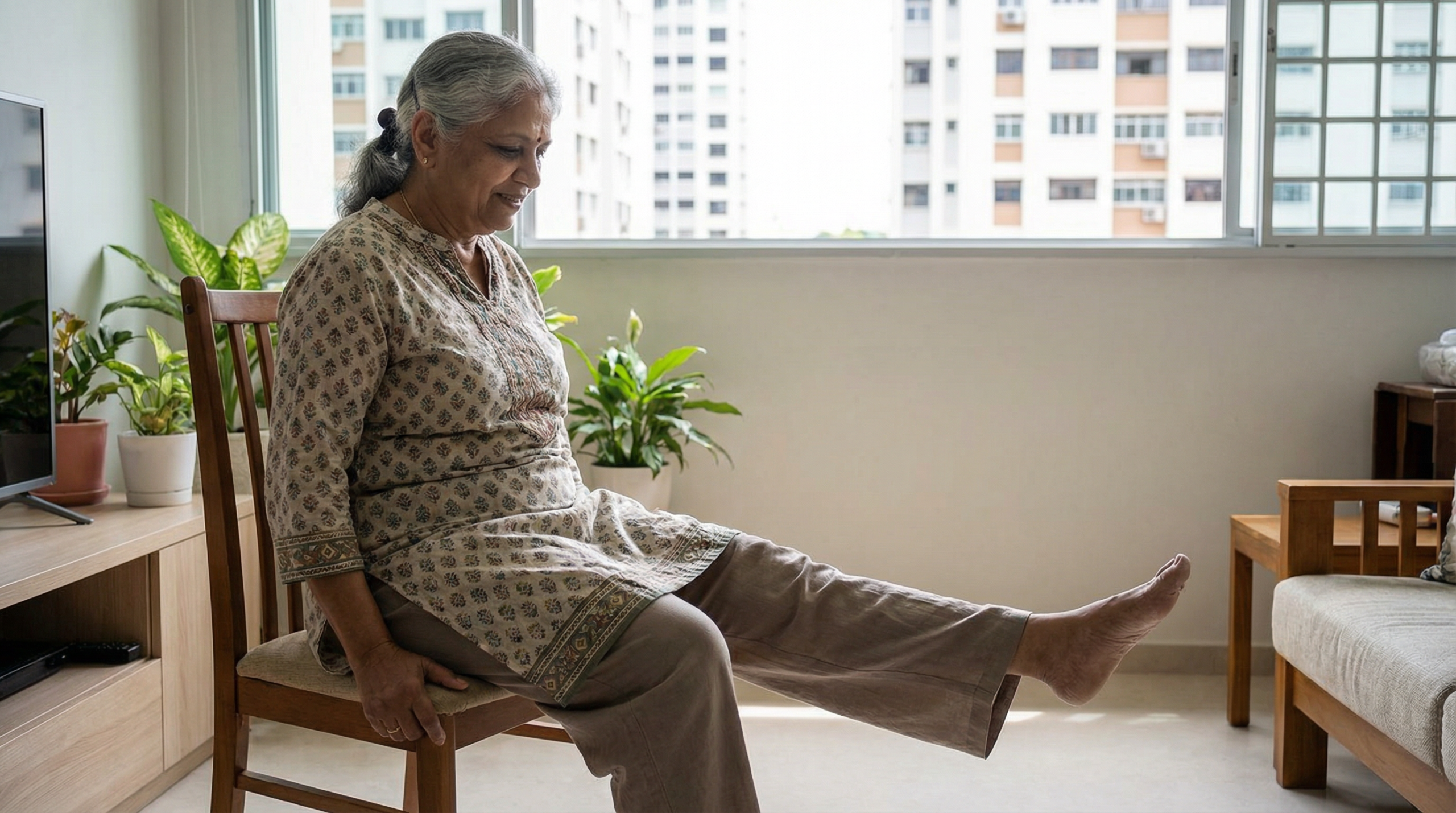
Osteoarthritis is Singapore's most prevalent joint condition — affecting roughly 1 in 8 Singaporeans, with prevalence rising steeply after age 60. If you or a parent are managing knee pain, hip stiffness, or general joint discomfort, the most frustrating piece of advice to receive is often also the most common: you need to keep moving.
It is frustrating because it sounds contradictory. Movement hurts. So how can more of it help?
The answer lies in understanding what kind of movement, and how to access it when the pain threshold makes conventional exercise genuinely difficult.
Why Movement Matters — Even With Osteoarthritis
Osteoarthritis is a condition characterised by the gradual breakdown of cartilage in the joints. When cartilage thins, bones can rub against each other, causing pain, stiffness, swelling, and reduced range of motion. The instinctive response to this pain is to rest and avoid the joint.
But rest, beyond the acute phase, worsens osteoarthritis outcomes. Here is why:
- Cartilage receives nutrition through movement — it has no blood supply of its own and relies on the mechanical compression and release of activity to draw in synovial fluid, which carries nutrients and removes waste products. Immobility accelerates cartilage deterioration.
- Muscle weakness increases joint load — the muscles surrounding a joint act as shock absorbers. When they weaken through inactivity, more force is transferred directly to the joint during everyday activities, increasing pain and long-term damage.
- Circulation to the joint deteriorates — reduced activity reduces blood flow to the affected area, contributing to inflammation and slower tissue maintenance.
The evidence is consistent: people with osteoarthritis who engage in appropriate regular movement have better pain outcomes, better function, and slower disease progression than those who rest.
The Key Word: Appropriate Movement
Not all movement is equal for people with osteoarthritis. The goal is to achieve the benefits of movement — cartilage nutrition, muscle activation, improved circulation — without the impact loading that causes pain and accelerates joint damage.
This means:
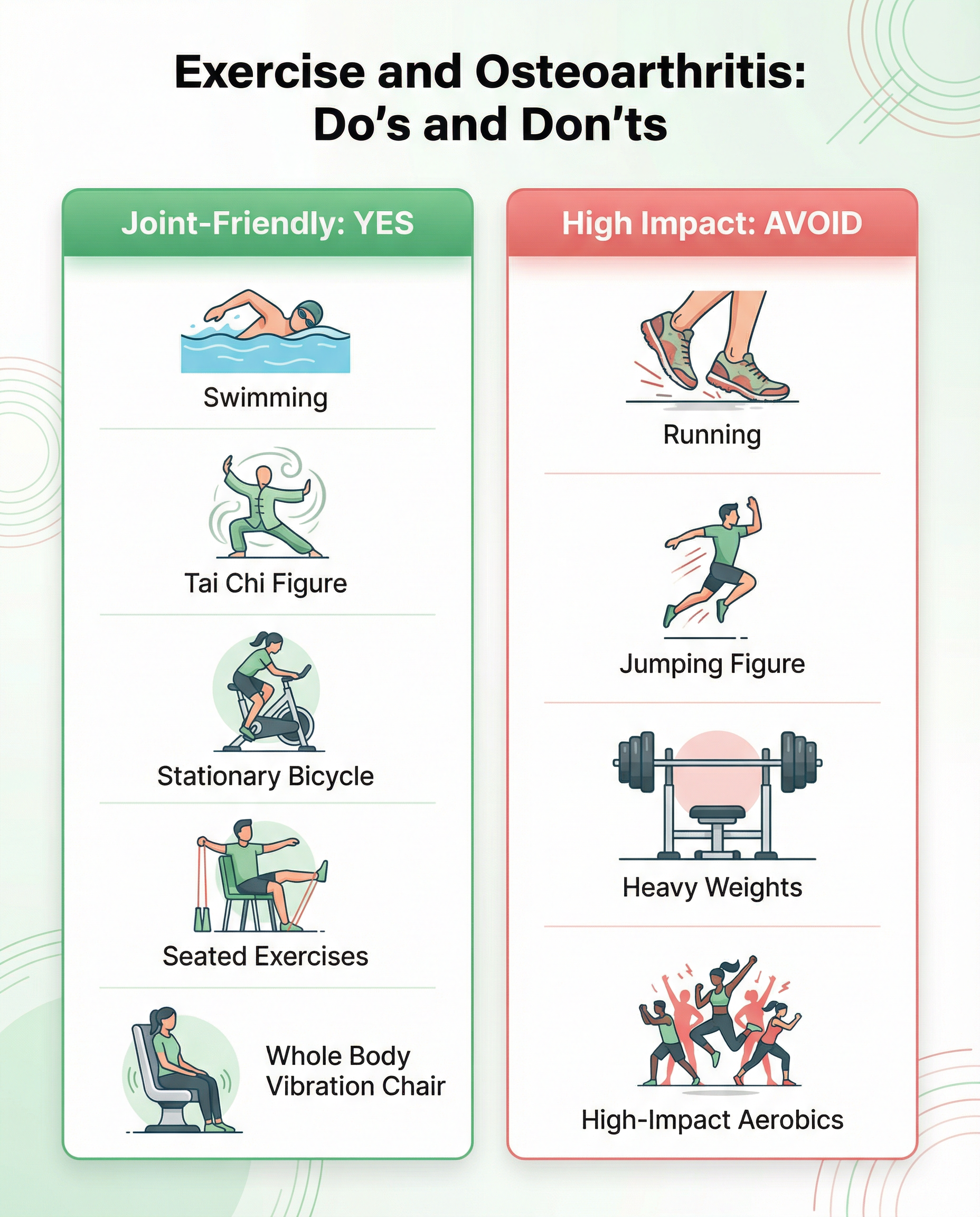
- Avoid: running, jumping, high-impact aerobics, exercises that involve repeated forceful knee bending under load
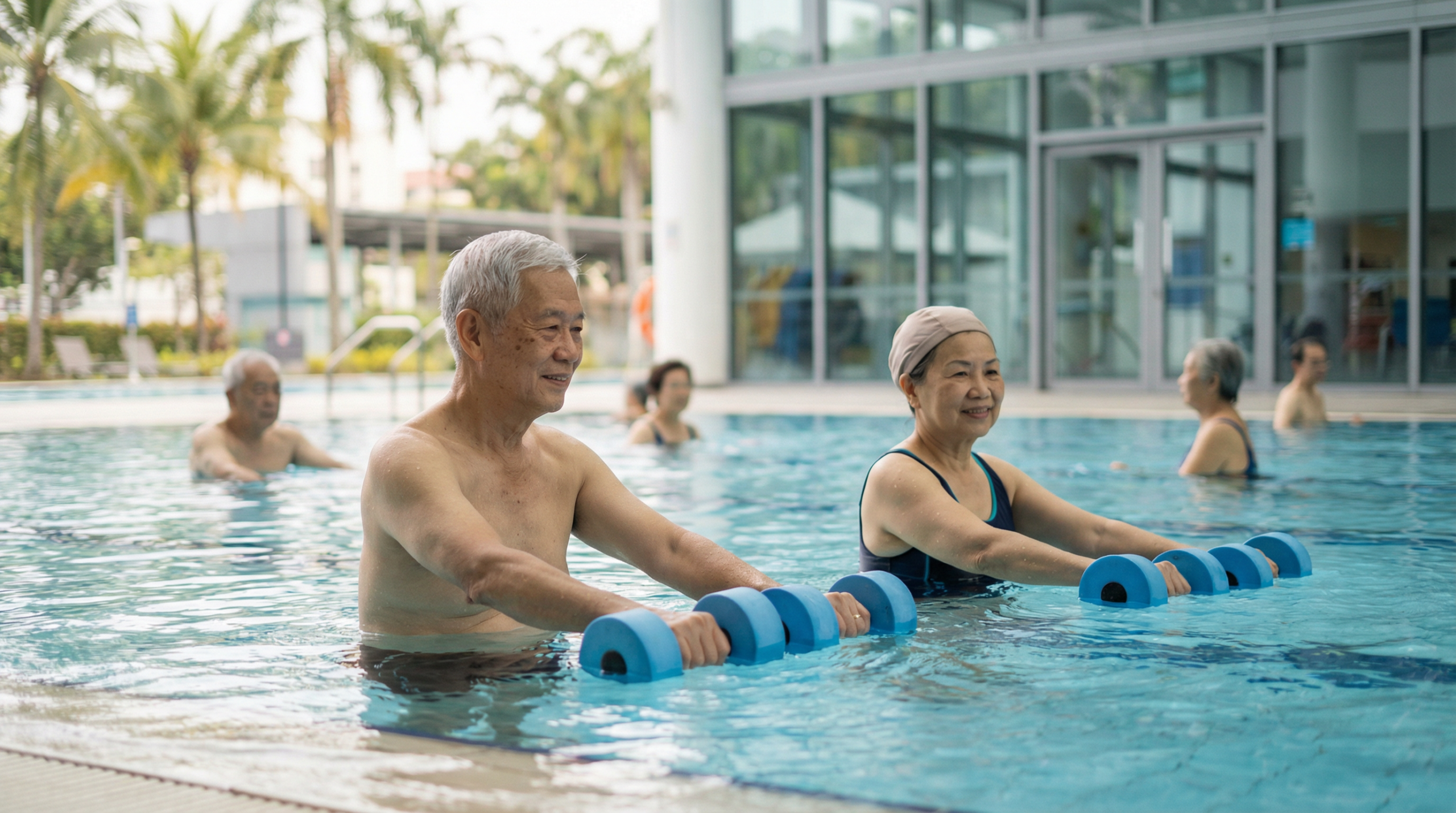
- Prefer: swimming, water aerobics, cycling (stationary), Tai Chi, seated stretching, resistance training with light loads
- Consider: whole body vibration as a complementary approach — see below
Exercise Guidelines for Osteoarthritis by Joint
Knee Osteoarthritis
Knee OA is the most common form in Singapore. Effective low-impact approaches include:
- Seated leg extensions — strengthens the quadriceps without joint loading. The quadriceps are the primary muscle group for knee stability and pain reduction in knee OA.
- Straight leg raises — lying or seated, raising the leg with the knee straight. Activates the quadriceps and hip flexors with minimal knee stress.
- Stationary cycling — provides cardiovascular benefit and joint lubrication with very low impact. Resistance should be kept low.
- Water-based exercise — buoyancy reduces effective body weight by up to 90%, making movements that would be painful on land comfortable in water.
Hip Osteoarthritis
- Seated hip rotations — gently rotating the hip joint through its pain-free range maintains mobility and cartilage health.
- Side-lying leg lifts — strengthens the hip abductors, which stabilise the hip during walking and reduce the load on the hip joint.
- Walking on flat surfaces — with supportive footwear, short flat-surface walks provide joint lubrication without the impact of uneven terrain or inclines.
Generalised Joint Stiffness and Multiple Joint Involvement
For older adults managing stiffness and discomfort across multiple joints, whole body vibration (WBV) technology offers an approach that supports circulation and gentle muscle activation simultaneously, without requiring the person to load any specific joint.
Whole Body Vibration and Osteoarthritis: What the Research Suggests
Several peer-reviewed studies have examined the use of whole body vibration in people with osteoarthritis and older adults managing joint pain. The findings are broadly positive, with caveats:
- Studies have found that WBV sessions are associated with reductions in self-reported pain and improvements in physical function scores in knee OA populations
- Improvements in quadriceps strength — the most critical muscle group for knee joint protection — have been reported following regular WBV training
- WBV appears to improve proprioception (the joint's sense of position), which is relevant to both pain management and fall risk in OA patients
Importantly, WBV delivers these effects through involuntary muscle activation triggered by vibration — the person sits or stands on the platform without actively exercising. This makes it accessible for people whose pain levels or mobility limitations make conventional exercise difficult or impossible to sustain.
At Vibrahealth, our BGREEN WBVV (Whole Body Vertical Vibration) products are used by many visitors managing joint discomfort as part of a broader wellness routine. They are general wellness equipment and are not medical devices. We do not claim to treat, cure, or prevent osteoarthritis or any other condition. If you are managing a diagnosed joint condition, please consult your doctor or physiotherapist about what is appropriate for you — and consider asking them about whether WBV might be a useful complement to your existing management plan.
Practical Starting Points for Exercise With Joint Pain
If pain has kept you — or your parent — away from physical activity for a while, here is a realistic starting framework:
- Start with 5 minutes. Not a programme. Not a routine. Five minutes of gentle seated movement — ankle circles, knee extensions, shoulder rolls — once a day. The goal is to establish the habit before increasing the volume.
- Use warmth before activity. A warm shower, a heat pack on the affected joint, or simply being up and about for 30 minutes first thing in the morning reduces stiffness significantly before attempting movement.
- Move in water if possible. Singapore has numerous public swimming pools with senior swim sessions. Even standing and walking in chest-deep water for 15 minutes provides significant joint benefit.
- Consider passive exercise for consistency. On days when pain levels make conventional exercise unappealing, a passive exercise session — whether WBV or gentle seated stretching — maintains the habit and circulation benefit without the exertion barrier.
- See a physiotherapist. A tailored programme from a qualified physiotherapist is far more effective than generic advice. Many polyclinics in Singapore provide physiotherapy referrals, and private physiotherapy is widely available.
Frequently Asked Questions
Is walking good for osteoarthritis of the knee?
Generally, yes — particularly on flat, smooth surfaces and with supportive footwear. Walking lubricates the knee joint and strengthens surrounding muscles. The caveat is that walking on uneven terrain, hills, or for excessive distances can increase impact loading and pain. Start with short, flat walks and increase gradually based on how the joint responds.
What is the best exercise for elderly people with knee pain in Singapore?
Seated leg strengthening exercises (quad sets, straight leg raises), water-based exercise, stationary cycling, and Tai Chi are well-supported options. For those who cannot sustain conventional exercise, whole body vibration as passive exercise offers muscle activation and circulation benefits without joint loading. Always consult a physiotherapist for individualised guidance.
Should you exercise when osteoarthritis is flaring?
During an acute flare — when the joint is hot, swollen, and more painful than usual — rest and cold therapy are appropriate. Gentle range-of-motion movements (not strengthening exercises) may help maintain joint mobility during a flare without worsening inflammation. Return to more active exercise when the acute phase subsides.
Can whole body vibration help with osteoarthritis?
Research suggests WBV may support improvements in pain, function, and muscle strength in people with knee osteoarthritis. It is used as a complementary approach alongside, not instead of, physiotherapy and medical management. Our products are wellness equipment and not medical devices — please consult your doctor for advice specific to your condition.
Vibrahealth offers complimentary sessions at our Wellness Lounge at The Adelphi, Singapore. Many of our visitors use WBV alongside physiotherapy for joint wellness support. WhatsApp us or book a free trial.
Our products are general wellness equipment. They are not medical devices and are not intended to diagnose, treat, cure, or prevent any medical condition. Please consult a qualified healthcare professional.