
Research Notice: Research cited on this page is independent, peer-reviewed scientific work. BGREEN and Turtlegym products are wellness and lifestyle equipment — they are not medical devices and are not intended to diagnose, treat, cure, or prevent any medical condition. Findings from independent research do not constitute claims about Vibrahealth products. Persons with health conditions should consult a qualified healthcare professional before use.
WBV for Sarcopenia in Care Institutions: What a 2018 BMC Geriatrics Study Found
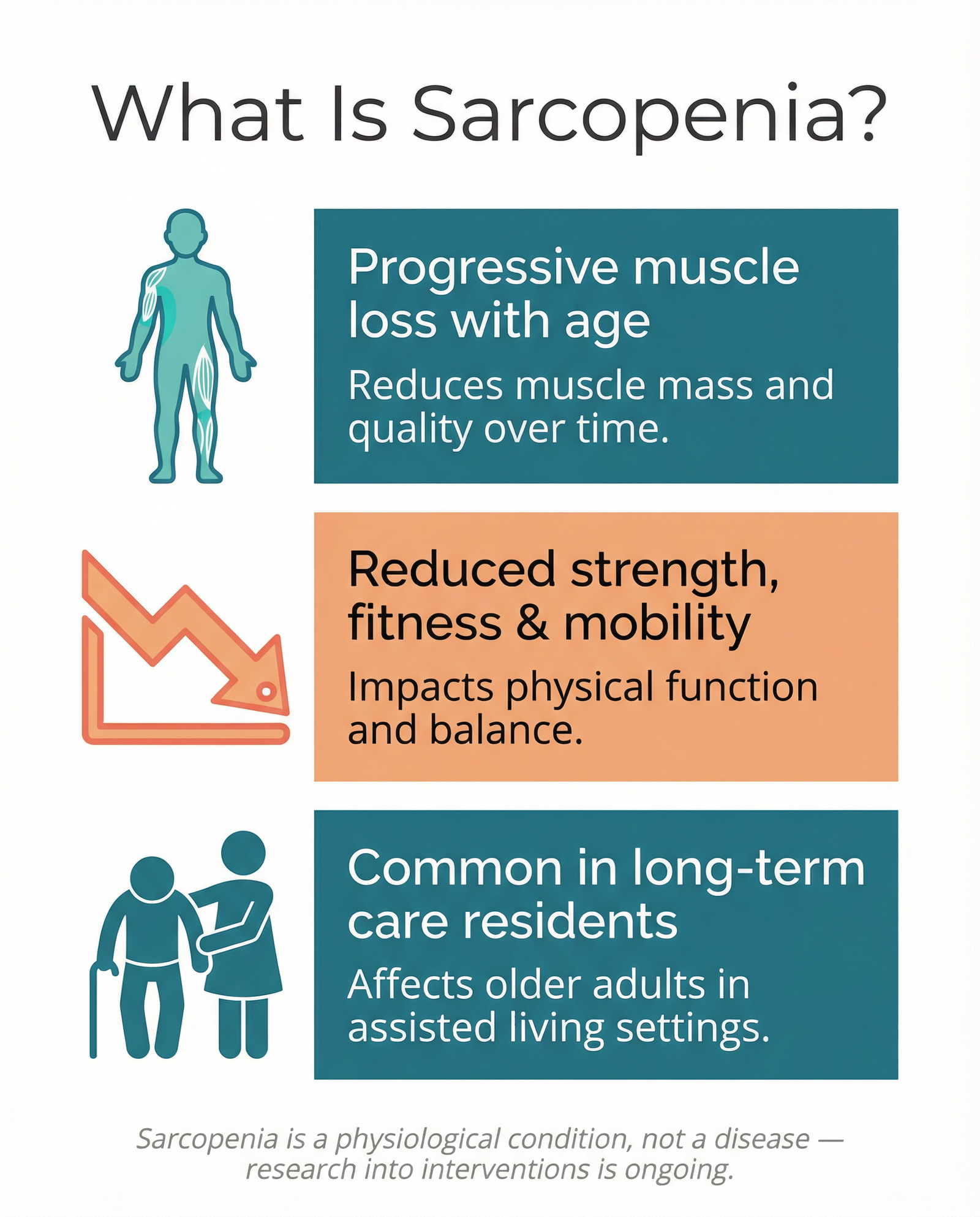
For older adults living in residential care, sarcopenia — the loss of muscle mass, strength, and physical function that accompanies ageing — is not a background risk. It is a present reality. Studies suggest that sarcopenia affects between 30% and 60% of institutionalised elderly populations, contributing to falls, functional decline, and reduced quality of life in exactly the settings where exercise is hardest to deliver.
In 2018, a research team published a randomised controlled trial in BMC Geriatrics — a peer-reviewed open-access journal published by BioMed Central under Springer Nature — specifically examining whole-body vibration (WBV) as an intervention for institutionalised older adults with sarcopenia.
About the Study
The study was authored by Chang and colleagues and published in BMC Geriatrics in 2018 (volume 18, article 206). BMC Geriatrics is a dedicated geriatrics research journal publishing peer-reviewed research on the health and healthcare of older people. It is indexed on PubMed and is part of the Springer Nature open-access portfolio.
A randomised controlled trial (RCT) is the gold standard study design for evaluating interventions — participants are randomly assigned to either a WBV group or a control group, allowing researchers to isolate the effect of the intervention itself. This makes the Chang et al. study particularly relevant for healthcare decision-makers evaluating options for their resident populations.
The Gap This Research Addresses
Most physical exercise research is conducted in community-dwelling older adults — people who are relatively mobile, able to follow instructions, and capable of conventional exercise. Institutionalised older adults are a different population. They are, on average, older, more frail, more cognitively impaired, and more physically dependent.
Standard resistance training programmes typically require a level of voluntary effort, coordination, and safety supervision that makes them impractical in nursing home and care home settings. WBV, by contrast, can be delivered passively or semi-passively — the participant stands or sits on a platform and receives the mechanical stimulus with minimal active effort required.
The question this research addressed was whether that vibration stimulus can produce clinically meaningful changes in sarcopenia-related parameters in this population — and whether it can do so safely.
What the Researchers Examined
The study assessed WBV as an intervention specifically targeting outcomes associated with sarcopenia in institutionalised elderly participants. Researchers measured outcomes related to muscle mass, physical performance, and functional capacity — the core parameters that define the clinical syndrome of sarcopenia.
The study design included a structured WBV protocol delivered over a defined intervention period, with participants assessed before and after the intervention to measure changes from baseline.
What the Researchers Found
The study reported significant improvements in sarcopenia-related outcomes among the WBV intervention group compared to controls. The findings supported the use of WBV as a feasible and potentially effective strategy for addressing sarcopenia in care home residents — a population for whom few practical exercise options exist.
The fact that the study was conducted in an institutional care setting, rather than a laboratory or community gym, is especially relevant. It means the findings reflect conditions closer to the real-world environments where this type of intervention would be implemented.
Understanding the Evidence in Context
Population specificity. This research was conducted in institutionalised older adults — a group defined by both their age and their residential care status. The findings apply most directly to this population.
RCT strength and limitations. RCT design provides strong causal evidence, but individual study findings are always strengthened by replication. This study should be read alongside the broader body of WBV research in comparable populations.
WBV is not a treatment for sarcopenia. The research investigates WBV as a physical stimulus. It does not examine BGREEN or Turtlegym products, and the findings do not constitute claims about any commercial product.
Implications for Eldercare Settings
For physiotherapists and activity coordinators in nursing homes, assisted living facilities, and day rehabilitation centres, research of this kind contributes to the evidence base for programme design. Sarcopenia in institutionalised elderly residents is both common and consequential — and a 2018 RCT published in a Springer Nature geriatrics journal provides a credible reference point for professionals evaluating physical activity options for their residents.
For eldercare managers and clinical directors assessing whether WBV technology is appropriate for their facility, this type of peer-reviewed evidence supports an informed, evidence-based evaluation process.
Learn More
The technology at the centre of this research is the same technology behind BGREEN products. Our Science page explains how whole-body vibration works and what distinguishes different vibration modalities.
For eldercare and healthcare B2B enquiries, including information on our care facility and rehabilitation partnerships, visit our Healthcare Partners page.
BGREEN and Turtlegym products are wellness and lifestyle equipment — not medical devices.
Source
- Chang SF, Lin PC, Yang RS, Yang RJ. (2018). The preliminary effect of whole-body vibration intervention on improving the skeletal muscle mass index, physical fitness, and quality of life among the older people with sarcopenia in long-term care facilities: A pre-experimental study. BMC Geriatrics, 18, 206. https://doi.org/10.1186/s12877-018-0712-8
For the full research topic overview, visit our Research Library.